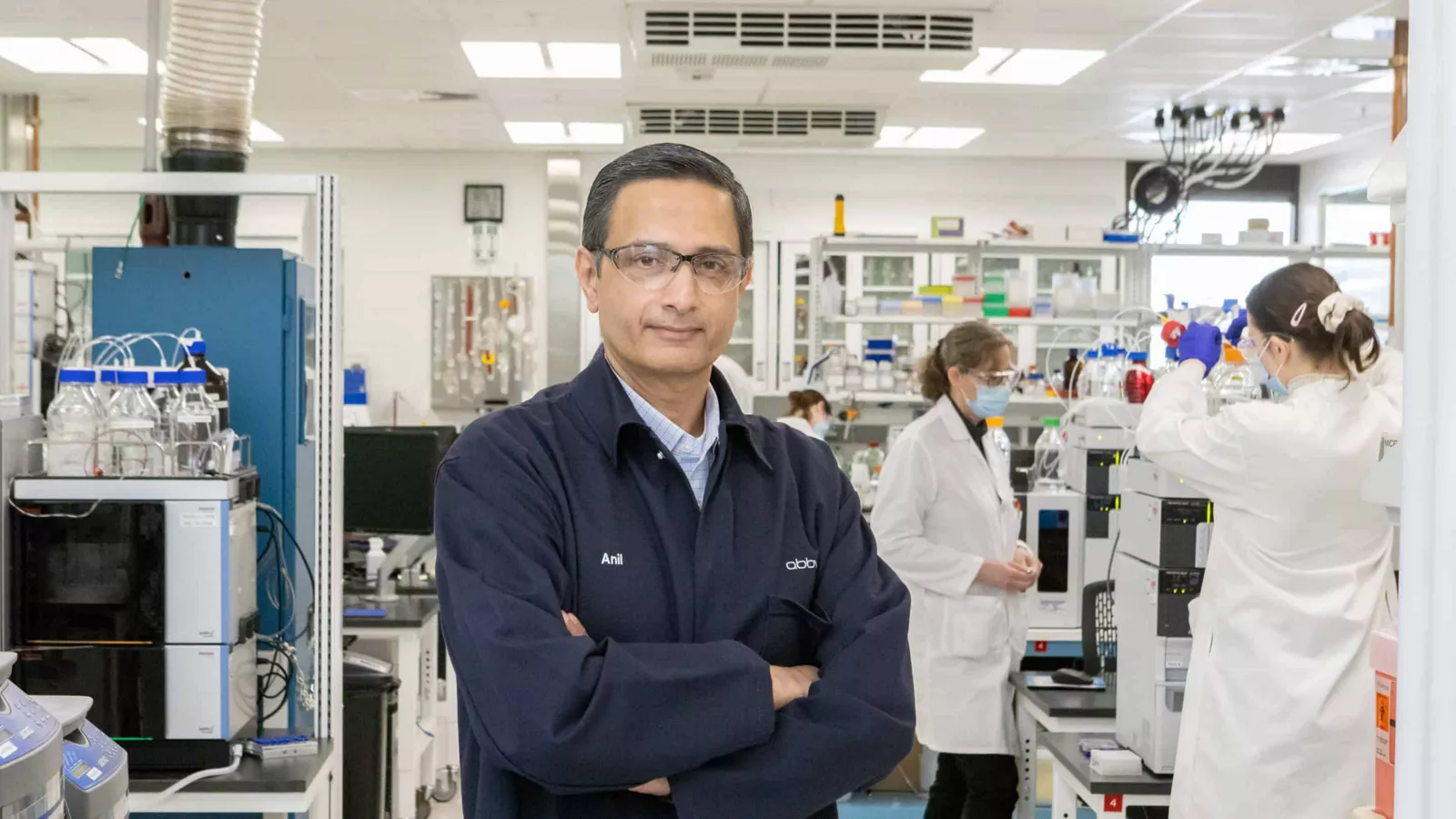
Inside how we are working to create tomorrow's breakthroughs.
Our work begins with a deep understanding of disease biology. We discover unprecedented insights about human disease through access to patient and genomic data. Once we identify the right target with a strong link to human disease, we turn to our R&D toolbox — a mix of traditional and cutting-edge modalities and platform technologies — to create the best molecule for that specific target.
Our arsenal of therapeutic modalities continues to grow along with advances in innovation and knowledge. We invest in breakthrough platform technologies, artificial intelligence (AI)/machine learning (ML) applications and drug delivery advances, helping us bring better medicines to patients faster.
(Turning a discovery into a medicine is) an arduous process of trial and error that can take many years. However, it’s the curiosity for the unknown and thirst for knowledge that excites and drives us.
Antibodies are our immune system's natural defense against disease. Monoclonal antibodies are similar proteins created in the lab and designed to bind to a specific disease-causing protein selectively. They originate from a single clone that can make identical copies of the same antibody in large amounts.
With extensive experience discovering and developing monoclonal antibodies, we're uncovering new insights to help inform treatments in various therapeutic areas, including immunology, oncology and neuroscience.
Multispecific antibodies are engineered in the laboratory and can bind multiple targets or sites simultaneously. This ability to bind to multiple targets distinguishes them from monoclonal antibodies and may help employ different mechanisms to attack the disease.
First-generation bispecific antibodies have demonstrated efficacy in certain blood cancers, but their effect on solid tumors has been limited. We are exploring novel bispecific platforms including T-cell engagers in oncology, to target hematologic and solid tumors. We are also designing multispecific antibodies to address multiple mechanisms in immunology and shuttle antibodies into the brain to target neurodegenerative diseases.
Antibody-drug conjugates (ADCs) are designed to target unique protein biomarkers, which are overexpressed across various tumor types, to deliver potent cancer-killing agents called ‘payloads’ to those cells.
ADCs are comprised of an antibody that is designed to bind to a protein present on cancer cells, and carries a chemotherapy drug, known as a ‘payload’. AbbVie is advancing a suite of ADCs designed to target protein biomarkers which are overexpressed across multiple solid tumors with high unmet needs.
Protein degraders are a class of therapeutic agents designed to selectively target and initiate the degradation of disease-causing proteins within cells. Unlike traditional inhibitors that block protein function, protein degraders employ the cell's own system to break down unwanted proteins. This approach offers a potential strategy for treating diseases that are driven by aberrant protein expression or activity, including cancer, autoimmune diseases and neurodegenerative disorders.
Cell and gene therapy represent cutting-edge biomedical techniques aimed at treating or potentially curing diseases at the genetic level. These therapies involve modifying or manipulating genes within a patient’s cells to correct genetic defects or to produce therapeutic substances.
Cell therapy
Cell therapy uses living, genetically modified cells to treat disease. The cells which are infused into the patient can either be from that patient (autologous) or a donor (allogeneic) and, hopefully in the future, derived from induced pluripotent stem cells (iPSC).
One example of this approach is chimeric antigen receptor T-cell (CAR-T) therapy. In CAR-T therapy, T-cells (a type of immune cell) from a patient or donor are engineered to target molecules on the surface of cancer cells to kill them.
Gene therapy
Gene therapy uses vectors, typically viral-derived proteins and lipid nanoparticles, to deliver therapeutic genes directly into a patient's cells.
We are working to develop next-generation gene therapies for patients in need and whose conditions could potentially benefit from this approach. We are also exploring novel approaches in cell therapy, using gene therapy principles, to engineer cells in situ.
Together, these technologies offer promising new avenues for treating a wide range of conditions, from inflammatory diseases to cancer.
A small molecule inhibitor is a low molecular weight compound that can penetrate cells easily and obstruct specific biological processes or pathways, often by binding to proteins or enzymes. These inhibitors are commonly used to target and potentially treat diseases such as cancer, by blocking the activity of proteins involved in disease progression. Their small size and ability to interact with intracellular targets make them a versatile tool.
A therapeutic toxin is a biologically derived substance that is used in controlled, targeted doses to treat various medical conditions. These toxins can offer therapeutic benefits by disrupting neuronal communication. With over three decades of leadership in neurotoxins, AbbVie is at the forefront of developing next-generation therapeutic toxins in neuroscience and other specialty conditions.
Help us create the future of medicine.
Unless otherwise specified, all product names appearing in this internet site are trademarks owned by or licensed to AbbVie Inc., its subsidiaries or affiliates. No use of any AbbVie trademark, trade name, or trade dress in this site may be made without the prior written authorization of AbbVie Inc., except to identify the product or services of the company.
Copyright © 2026 AbbVie Inc. North Chicago, Illinois, U.S.A.
The product-specific site Internet site that you have requested is intended for the residents of a particular country or countries, as noted on that site. As a result, the site may contain information on pharmaceuticals that are not approved in other countries or region. If you are a resident of a country other than those to which the site is directed, please return to AbbVie.com or contact your local AbbVie affiliate to obtain the appropriate product information for your country of residence. The Internet site that you have requested may not be optimized to your screen size. Do you wish to continue to this product-specific site?